This article brings together what genuinely matters to understand clearly, transparently, and grounded in clinical experience so that you arrive at your consultation prepared and make your decision with confidence.
Orthodontic Treatment – What’s Important to Know?
Orthodontic treatment can correct crowded or crooked teeth, gaps and bite problems while improving both the appearance and function of the smile. The most suitable method depends on the position of the teeth and jaws, the complexity of the required movement, the patient’s age and individual needs. Treatment may involve clear aligners, fixed braces or other orthodontic appliances, with regular professional monitoring throughout the process. Once the teeth reach their planned position, retention is an essential part of treatment and helps maintain the result over the long term.
Straight Teeth, and a Smile You Never Have to Hide
If your teeth protrude or sit crookedly, if you have gaps between them or teeth that overlap one another, and if you are unhappy with your smile, it doesn't have to stay that way. Dr. Meir Mamraev's clinic provides orthodontic treatment at any age, and no, you don't have to walk around with a mouth full of metal. With clear aligners you can enjoy straight, attractive teeth without discomfort, and without anyone knowing you are undergoing orthodontic treatment at all.
- Over 25 years of experience.
- Emphasis on personalized, professional care tailored to each patient’s needs.
- Use of the most advanced technologies in modern dentistry.
- Commitment to excellence and maintaining the highest standards of service.
Orthodontics and What You Should Know Before You Begin
Orthodontic treatment is not only about improving the appearance of your smile. It also addresses crowding, spacing, and bite problems that can affect chewing, cleaning, and overall oral health. The treatment method is chosen according to the condition of the teeth and jaws, the patient's age, the complexity of the movements required, and the patient's lifestyle. Preliminary diagnosis, professional monitoring, and careful adherence to treatment instructions make it possible to plan a result that is precise, stable, and healthier over time.
Once alignment is complete, the retention stage is essential, it helps hold the teeth in their new position over the long term.
There are differences between children and adults in the field of orthodontics, such as the matter of baby teeth versus permanent teeth, education toward proper oral hygiene, aesthetics, pain, and so on.
Orthodontic treatment for adults has become increasingly popular in recent years. Some dentists specialize in specific types, and some clinics offer the full range of options.
In Summary, Straightening teeth with clear aligners delivers excellent aesthetic results along with good dental health. This innovative treatment is suitable for a wide range of orthodontic problems. It is appropriate for closing gaps between teeth, for crossbite, where one tooth, or perhaps more, is in a reversed closing position relative to the opposing jaw, for crowded teeth, crooked teeth, teeth that overlap one another, and more.
Why Patients Choose Dr. Meir Mamraev for Orthodontic Care
More than 25 years of professional experience.
An emphasis on personal, professional care tailored to each patient's needs.
Use of the most advanced technologies in dentistry.
A commitment to excellence and to consistently high standards of service.
Why Straightening Teeth Matters Beyond Appearance
Crowded teeth or teeth positioned incorrectly can allow bacteria and food debris to accumulate between them, leading to the development of tooth decay.
Teeth that protrude excessively, or teeth that stand at an angle rather than straight, may transmit chewing forces off the long axis of the tooth root and cause gum recession.
At times, when a patient is undergoing full-mouth rehabilitation with dental implants, the dentist will work together with an orthodontist to move one or several teeth and open up space where a dental implant can be placed and a crown fitted on top of it.
What Orthodontic Treatment Actually Involves
Orthodontic treatment is a form of dental care aimed at correcting irregularities of the teeth and jaws, including bite defects, improving the patient's occlusion, and creating a straight, symmetrical smile. This is achieved using a range of orthodontic appliances, such as plates, headgear, and others. Alignment also supports speech, chewing, and long-term oral health.
When Is Orthodontic Treatment Recommended?
Orthodontic treatment is recommended in cases of:
- Crooked, rotated, or crowded teeth
- Teeth erupting in the wrong area of the gum
- Teeth that do not meet correctly
- Gaps between the teeth
- A missing tooth
- Difficulty speaking or eating
- A "surplus" tooth
Malocclusion, When the Bite Doesn't Line Up
Malocclusion is one of the most common dental problems. It presents as the upper and lower teeth failing to align when the mouth is closed. Malocclusion usually occurs when the teeth are crowded, that is, too large for the mouth, or crooked. It can also occur when the upper and lower jaws themselves are not aligned. Malocclusion is generally treated with braces or a plate. In more severe cases, surgery may be required.
Dental Crowding and Its Variations
Dental crowding is classified in several ways:
By degree of crowding:
- Mild crowding, defined as a single tooth lacking less than 3 mm of space.
- Moderate crowding, when 2 or 3 teeth are misaligned and 3–5 mm of arch space is lacking.
- Severe crowding, when teeth sit outside the line of the jaw and more than 6 mm of space is needed.
By the position of the teeth within the jaw:
- Anterior crowding: when the front teeth (incisors and canines) are crowded or overlapping.
- Posterior crowding: when the back teeth (premolars and molars) are crowded or overlapping.
- Spacing: occurs when there are gaps between the teeth due to missing or additional teeth.
- Rotations: teeth may rotate within the jaw, resulting in a misaligned bite.
- Impacted teeth: a tooth that fails to erupt through the gum due to a lack of space.
- Deep bite: when the upper front teeth overlap the lower front teeth excessively.
- Open bite: when the upper and lower front teeth do not meet while the back teeth are biting together.
- Underbite: when the lower jaw and teeth protrude further forward than the upper jaw and teeth.
Orthodontic Methods, Choosing the Right Approach
The Insignia Method
The duration of lingual orthodontic treatment depends largely on patient-specific factors, such as differences in age, the condition of the teeth at the start of treatment, and more. On average, for most patients the internal appliance can be removed after roughly one to two years from the start of treatment. That said, we have also seen patients complete treatment in shorter periods.
It is important to clarify that removing the appliance in lingual orthodontics does not necessarily mark the end of treatment. The main stage has indeed been completed, but after the internal appliance is removed it is advisable to use a special retainer or plate designed to keep the teeth aligned in their new position. This appliance, usually worn only at night, prevents the teeth from shifting over time and thereby preserves the aesthetic result patients want most.
Clear Aligners
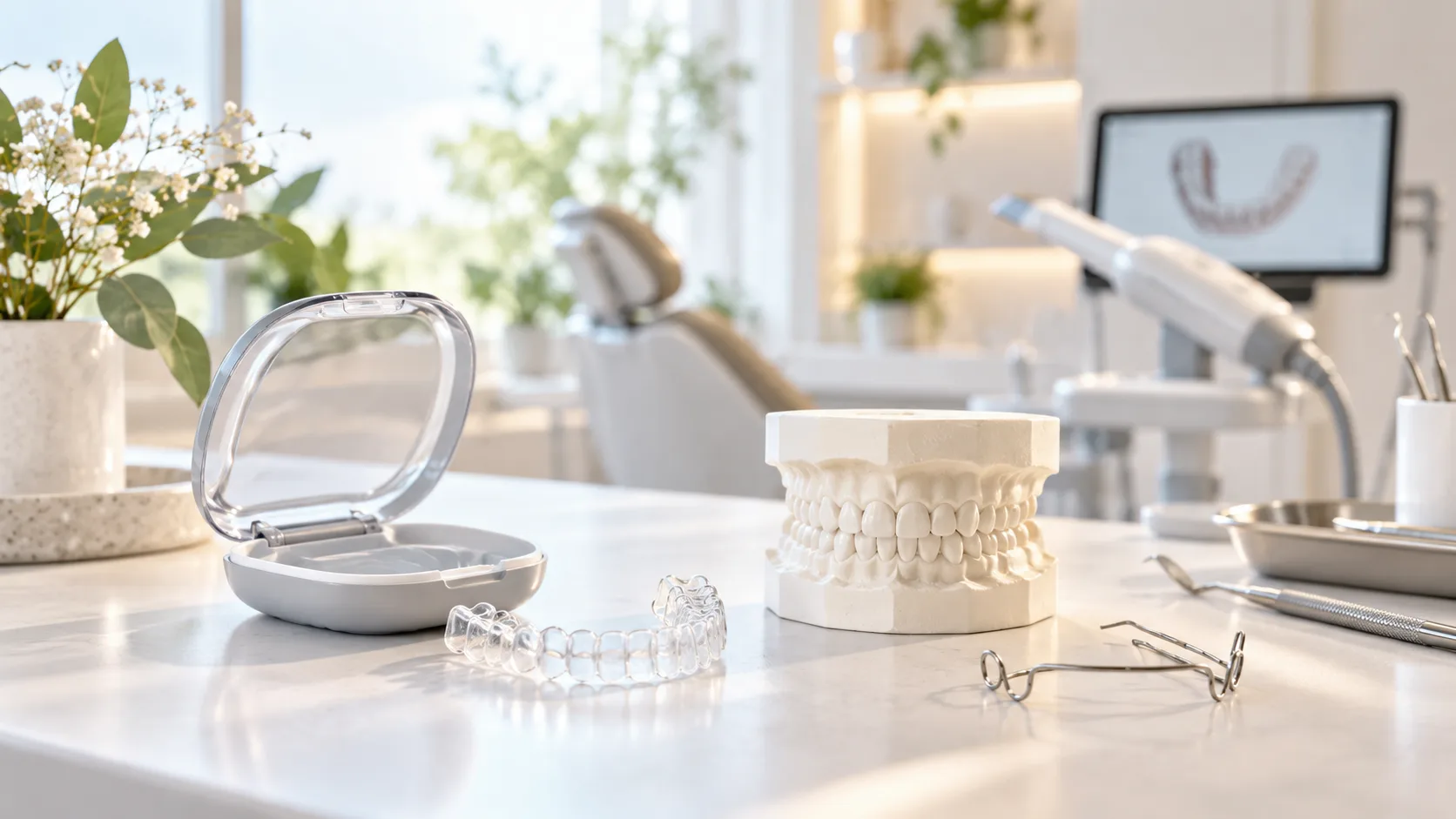
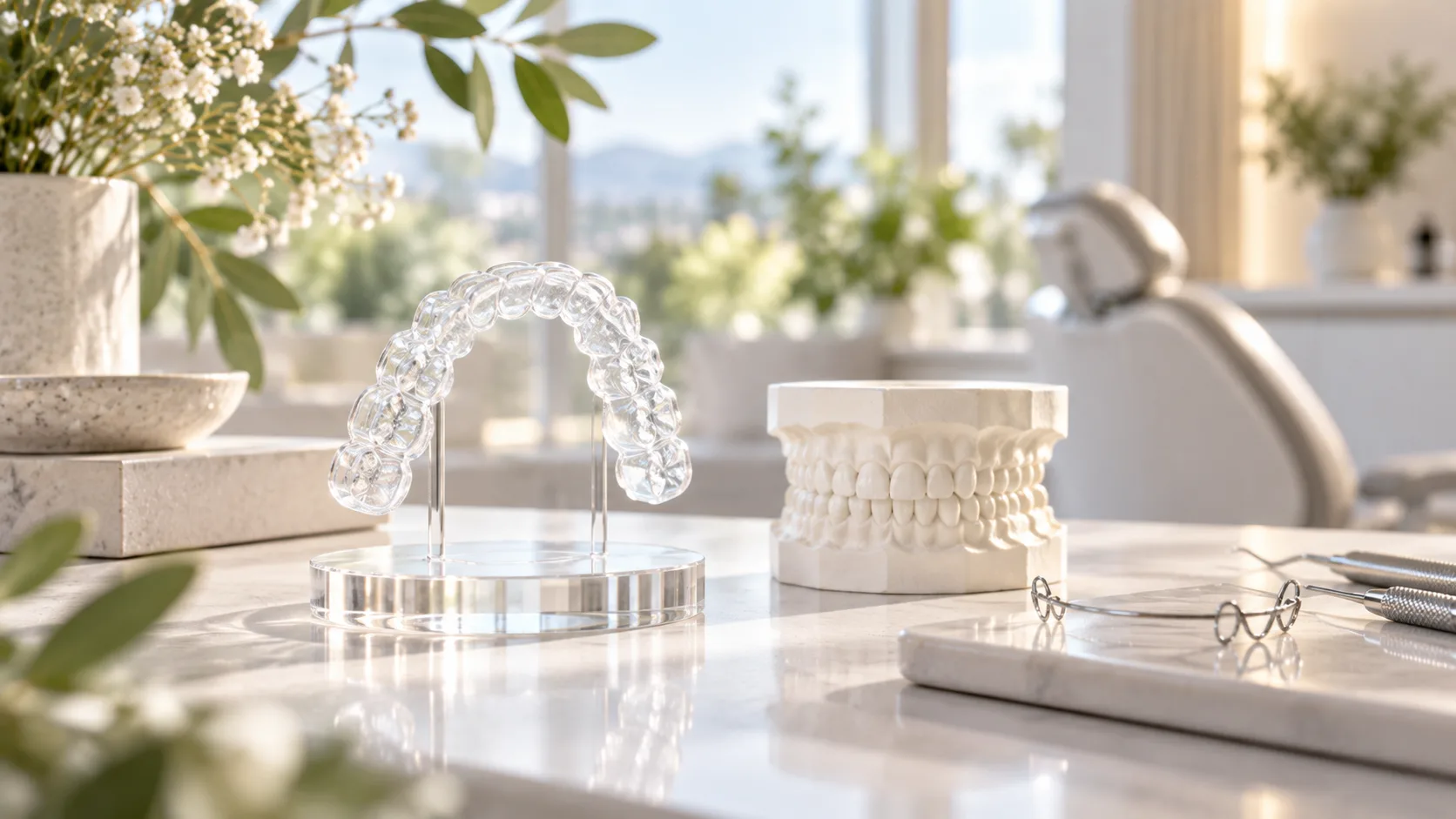
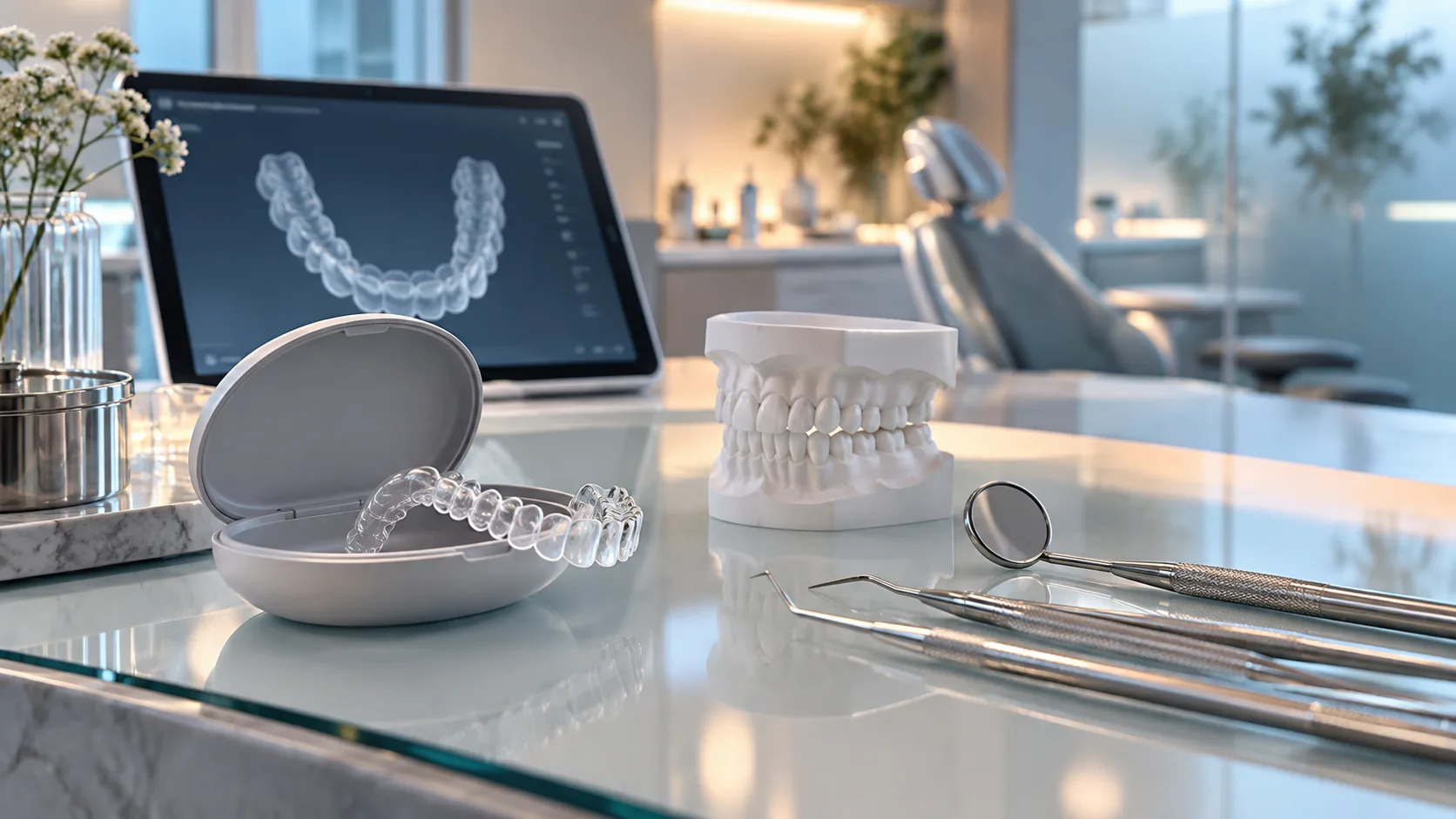
The process begins with a scan of the oral cavity. The dentist sends the results of the three-dimensional scan to the laboratory, where the data is processed, the treatment is planned, and a series of clear aligners is produced. These fit over the teeth, with the process managed independently by the patient (under a dentist's supervision, of course). As the teeth move closer to their intended position, each aligner is replaced by the next in the series. The method is distinctive in several respects: the attachments are transparent, daily life is unaffected, hygiene is relatively easy to maintain, and the aligners are easily removable.
The Inman Aligner
Inman aligners are simple to remove. They effectively straighten front teeth within a relatively short time frame, measured in a matter of weeks. The Inman method is not suited to highly problematic cases; it is particularly effective in cases of mild dental crowding. The results are aesthetic and clean compared with other methods, and the only visible element is a thin metal wire running across the front teeth. All of this, together with a relatively low price, makes the Inman method an attractive option. The mechanism works by means of a lingual coil spring positioned behind the teeth. The spring applies pressure to the teeth, pushing them into their new position. On the outer side of the teeth is a metal wire, the component that applies counter-pressure to maintain balance.
The Lingual Bridge (Internal Bridge)
The process begins with precise measurements of the jaw. Based on these measurements, a computerized dental model is produced in order to plan the fitting of the brackets individually for each patient. The bracket is then installed behind the teeth.
The method offers several advantages:
- No aesthetic interference
- A precise fit to the structure of the teeth
- The outer surface of the tooth is not damaged during installation
- No accumulation of bacterial plaque or decay
Protruding Teeth or a Protruding Jaw
This is a condition in which the teeth, or the upper or lower jaw, extend beyond normal alignment. Protruding teeth can appear in either jaw individually, or in both. The condition is caused by genetic factors, by an improper bite, or by a problem in jaw growth.
Protruding teeth can have negative effects: they may wear the teeth down more quickly, create a tendency toward fracture, and break the front teeth. They may also affect speech and biting. Beyond this, they affect the appearance of the smile, making it less aesthetic.
Orthodontic treatment such as plates, clear aligners, or jaw surgery may correct protruding teeth and jaws. In certain cases, a combination of several treatment methods may be required to achieve the desired result.
Clear Aligners, A Modern, Innovative, and Effective Approach
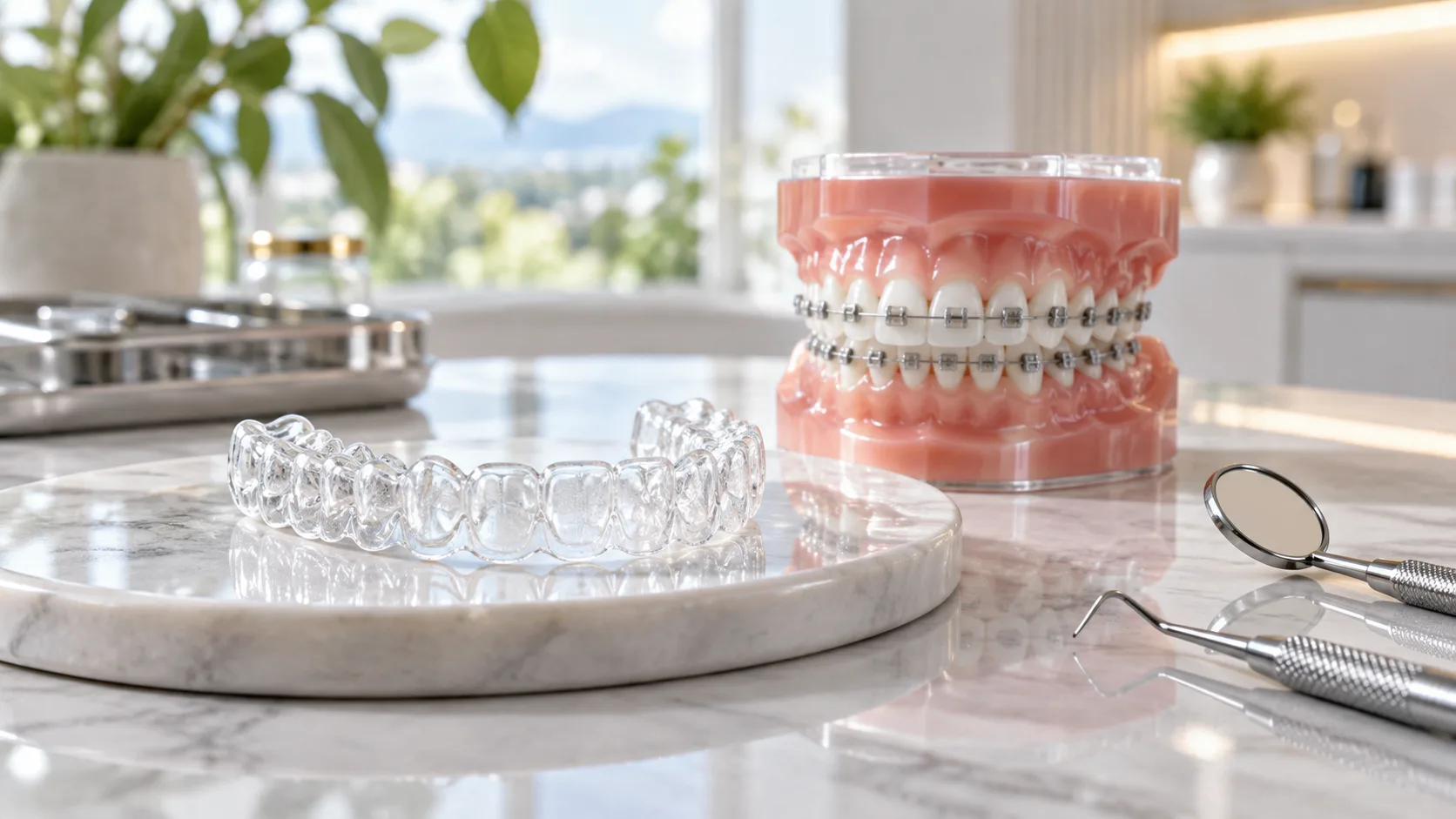
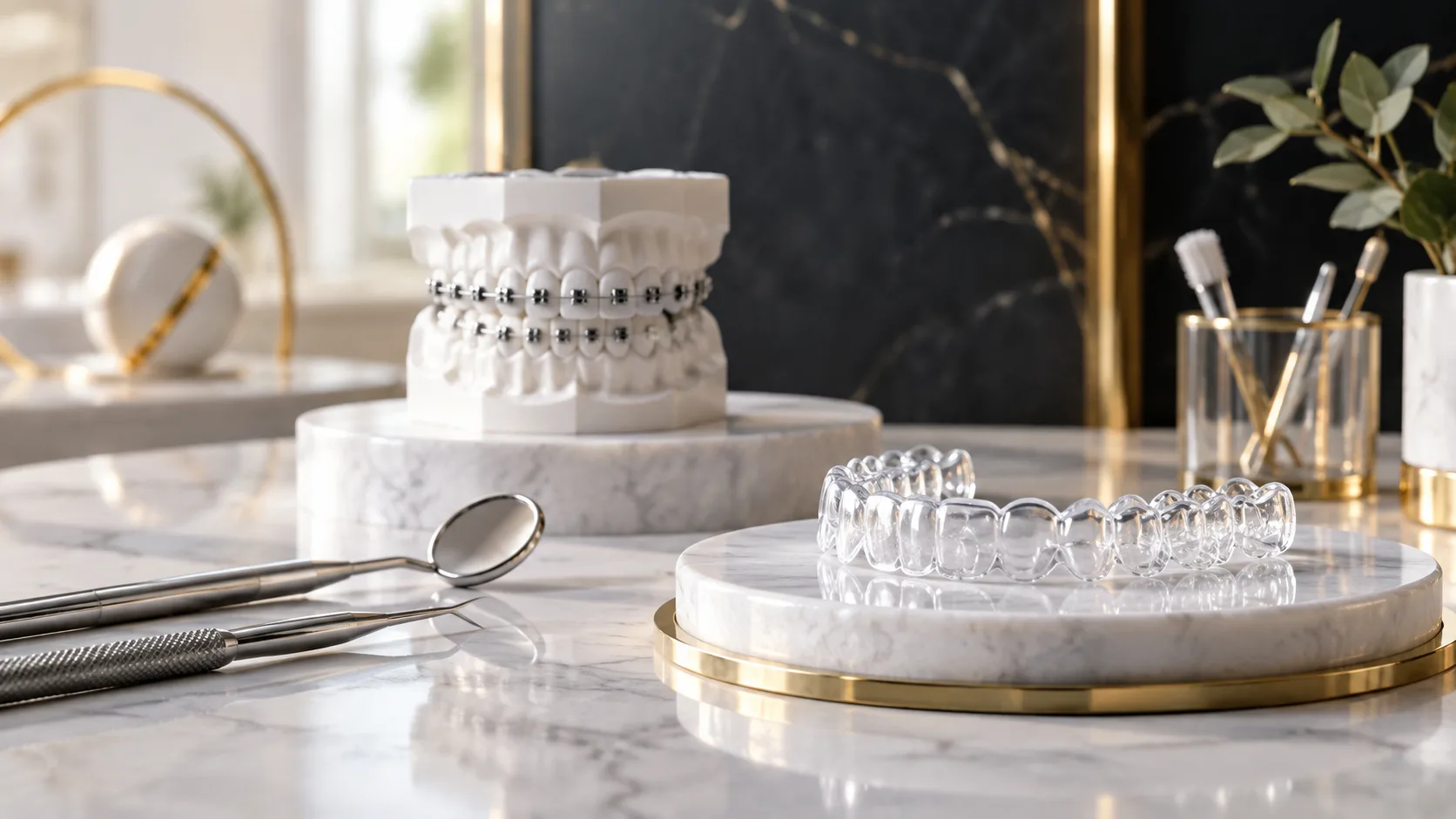
One of the classic methods of straightening teeth involves bonding special blocks to the teeth, known professionally as brackets, and connecting them with elastics and specialized wires in order to tension and move the teeth into the desired position. It is a slow process, but at its conclusion the teeth reach their optimal position.
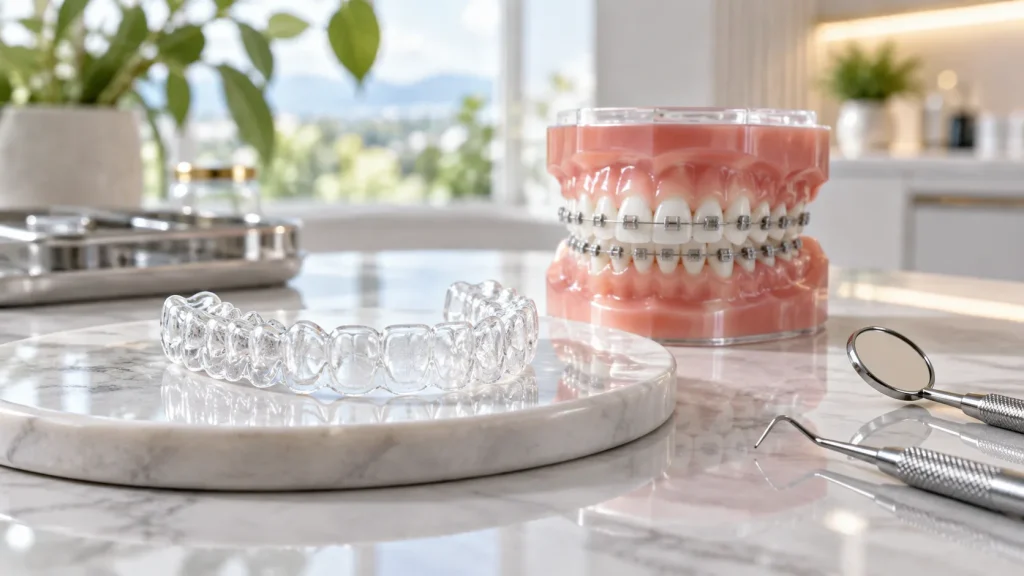
Many patients, particularly older ones, feel uncomfortable appearing in public with their teeth "adorned" with wires and blocks. The solution is orthodontic treatment using clear aligners fitted over the teeth. They are almost invisible and imperceptible, so you can achieve a bright, healthy smile easily, without embarrassment and without discomfort.
What Are Clear Aligners Made Of?
The clear aligner, also known as an invisible aligner or invisible bridge, is made from a material developed specifically for this method, and it is custom-fitted to the dental structure of each individual patient.
The Advantages of Clear Aligner Treatment
Straightening teeth with clear aligners is one of the most advanced methods in the field of orthodontics. It offers a number of advantages:
- Invisible – the aligners are made of a material called clear polymer.
- Highly comfortable – they contain no metal or wires.
- Easily removable – they can be taken out of the mouth while eating or brushing, making it possible to maintain a high standard of oral and dental hygiene. There is no restriction on what you may eat, and when you attend a special event and prefer to be there without the aligners, you can simply remove them.
- Individually tailored precision – the aligners are produced using computerized scanning of models that show precisely the desired position of the teeth at every stage of treatment. They are manufactured as a series of removable aligners, and at each appointment the dentist replaces the previous set with a new one that moves the teeth toward the ideal position determined by the dentist using the computer software. In this way, the dentist can track the movement of the teeth with precision and adjust the aligners each time according to the most current data.
The patient is required to wear the aligners for an average of twenty to twenty-two hours a day, in accordance with the dentist's instructions. The length of treatment is determined by the condition of the mouth and teeth before treatment begins, in line with the results the patient wishes to achieve.
A Brief Look at Clear Aligner Treatment and How It Unfolds
At the first appointment, the dentist gathers relevant data, takes radiographs, and makes an impression of the teeth. On the basis of this data, the dentist prepares a personal orthodontic treatment plan, tailored precisely to each patient.
The dentist then sends the collected data to the dental laboratory. The laboratory technicians process the data and generate software that divides the movement of the teeth into stages, in accordance with the plan the dentist has built. Based on the data the software produces, the technician fabricates aligners matched to each stage, aligners that will gradually move the teeth until they reach the desired position.
At each appointment, the patient receives new aligners suited to the current state of the teeth. From visit to visit, the aligners "move" the natural teeth through a relatively slow process, until they reach their correct position in the jaw and take on their ideal form.
Once the teeth have reached their natural position, the dentist bonds a retainer to the inner surface of the teeth, which holds them in their new position and prevents them from shifting.
Orthodontic Treatment with Fixed Braces (Brackets)
Orthodontic treatment works by applying forces to the teeth in order to change their position.
These forces act either inside the mouth or outside it, using various appliances such as headgear, a chin cap, brackets, archwires, and so on. Applying these forces requires anchorage (external or internal) that rests on a strong, stable point. This is the basis of the methods described above.
The Orthodontic Process, Step by Step
Orthodontic treatment generally includes the following stages:
- Preparation of the area used for anchorage
- Installation of attachments on the teeth scheduled to be moved
- Installation of the appliance that applies force to those teeth
- Periodic review, and assessment of whether the plan should be changed
- Evaluation and repeated adjustment of results
Orthodontic Care for Children and Adults Alike
There are differences between children and adults in the field of orthodontics, such as the matter of baby teeth versus permanent teeth, education toward proper oral hygiene, aesthetics, pain, and so on.
Orthodontic treatment for adults has become increasingly popular in recent years. Some dentists specialize in specific types, and some clinics offer the full range of options.
In Summary, Straightening teeth with clear aligners delivers excellent aesthetic results along with good dental health. This innovative treatment is suitable for a wide range of orthodontic problems. It is appropriate for closing gaps between teeth, for crossbite, where one tooth, or perhaps more, is in a reversed closing position relative to the opposing jaw, for crowded teeth, crooked teeth, teeth that overlap one another, and more.
Frequently Asked Questions About Orthodontic Treatment
- Improved chewing and speech
- Easier maintenance of oral hygiene
- Strengthening of the tooth roots
- Improved self-confidence
There is no single definitive answer, because the matter is highly individual and depends on many factors. Different patients respond differently, the methods vary, and age, the condition of the mouth, and even the patient's cooperation with the dentist all make a difference; the speed at which the teeth respond is likewise individual. In any case, treatment lasts from several months up to around two years. A professional dentist is able to estimate the treatment period based on familiarity with the patient and on prior experience.
Orthodontic treatment is not painful, though there is sometimes a certain sensation of pressure.
About Dr. Meir Mamraev
Dr. Meir Mamraev holds a Doctor of Dental Medicine degree (DMD) and also serves as the Medical Director of the Cortex dental implant company.
Dr. Meir Mamraev has more than 25 years of experience and directs the Center for Aesthetic and Restorative Dentistry in Kiryat Ono.
For years, Dr. Meir Mamraev has worked extensively in the fields of dental aesthetics, including full-mouth rehabilitation. He has broad experience in performing complex rehabilitations, and he is certified to carry out dental treatments under general anesthesia.