
Dental Implants – What’s Important to Know?
Dental implant treatment begins with a thorough evaluation of the teeth, gums and jawbone, often supported by X-rays or a CT scan to determine the most suitable treatment plan. The condition and amount of available bone, the number of missing teeth and the patient’s individual needs can all influence the type and number of implants required. After implant placement, the jawbone needs time to heal and integrate with the implant before the final restoration is completed. Choosing the right technique therefore depends on careful diagnosis and personalized planning rather than a single solution that is suitable for every patient.
Getting a dental implant isn't just a medical procedure, for many people, it marks a fresh start. Whether you're dealing with a missing tooth that makes eating difficult, or a smile you'd rather not show, these feelings are common, and they're often accompanied by apprehension about surgery.
This is where Dr. Meir Mamraev comes in, a senior dentist, consultant, and international lecturer who guides hundreds of patients each year toward a natural, aesthetic result with minimal discomfort. In this article, we'll cover everything you need to know about dental implants: what happens before, during, and after treatment, which methods are available today, and what to check before choosing a clinic.
- Over 25 years of experience.
- Emphasis on personalized, professional care tailored to each patient’s needs.
- Use of the most advanced technologies in modern dentistry.
- Commitment to excellence and maintaining the highest standards of service.
What Are Dental Implants, Exactly?
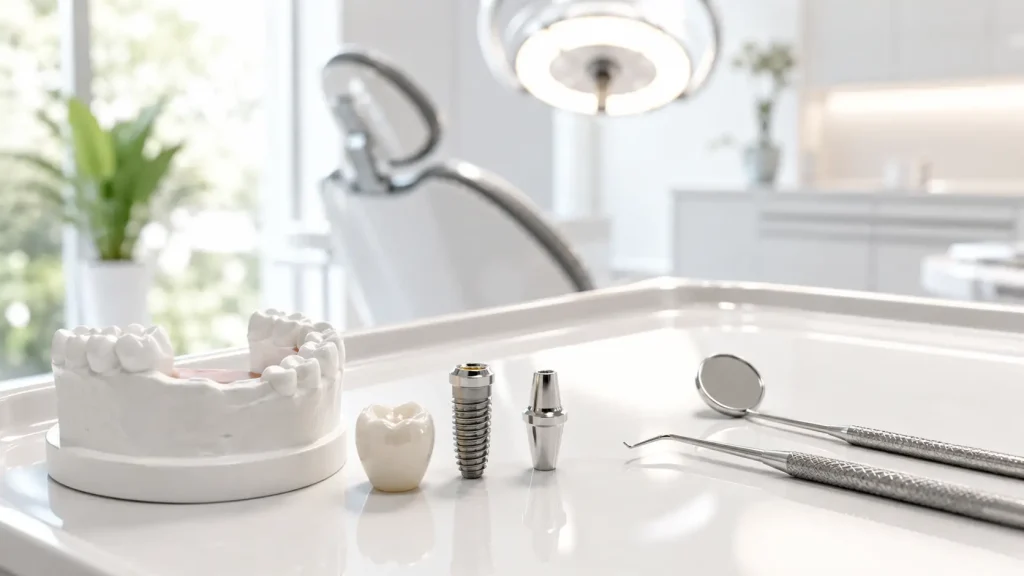
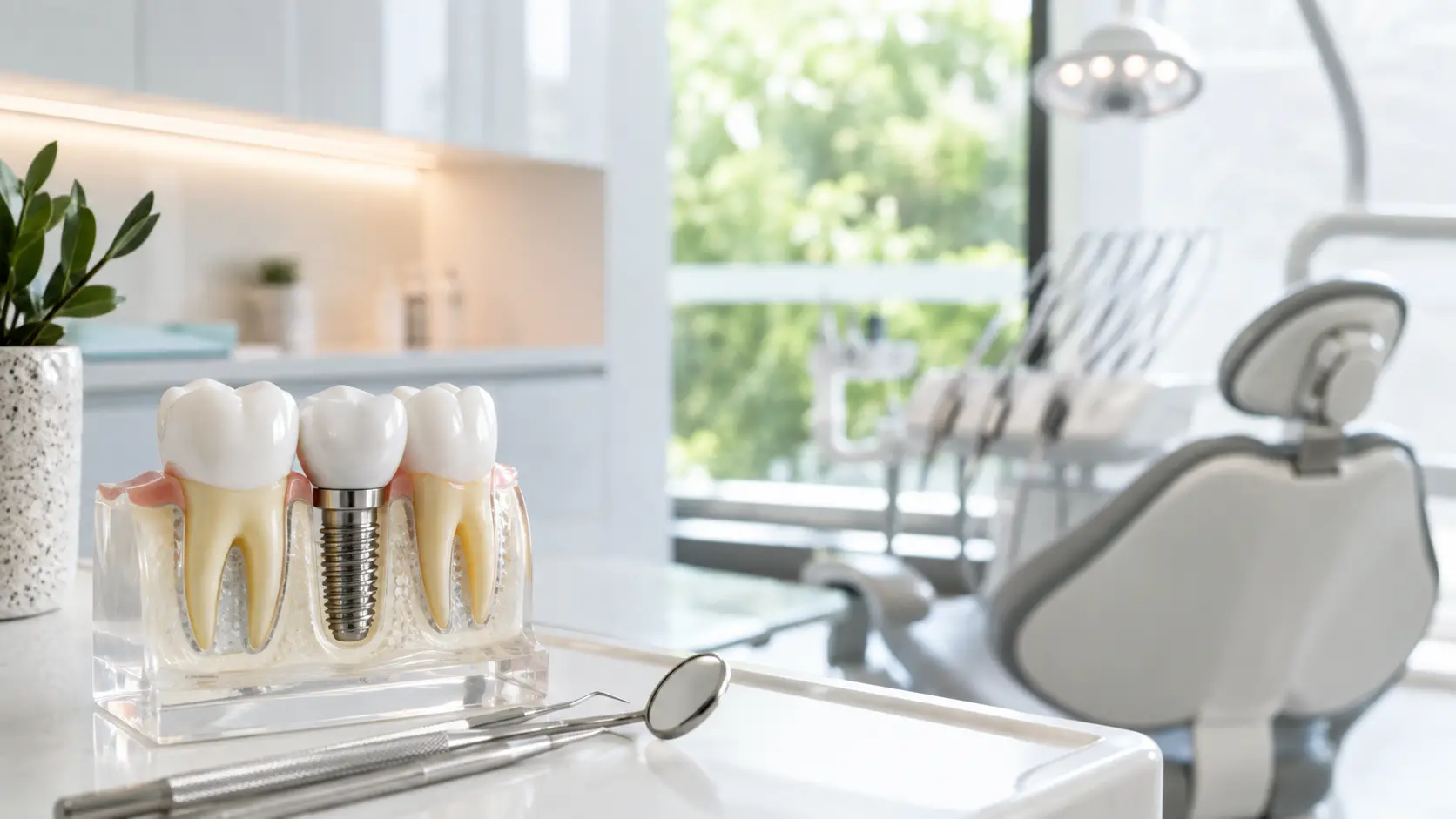
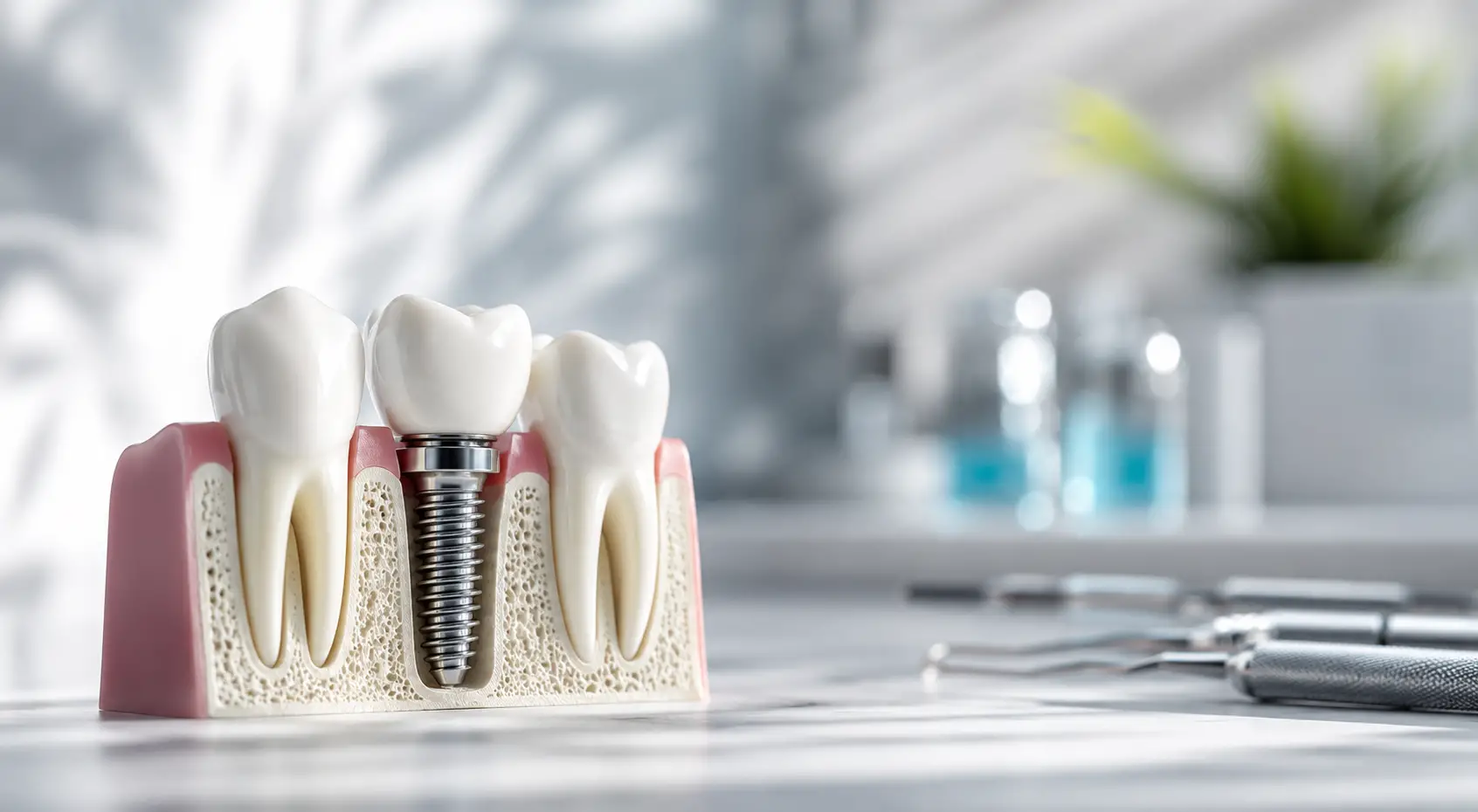
Dental implants are small titanium screws used in a surgical procedure in which they are inserted into the jawbone. Their purpose is to replace the root of a missing tooth, achieving a full restoration of the mouth, both aesthetically and functionally.
Benefits of Dental Implant Treatment
A reliable long-term solution – Implants anchor into the jawbone and help prevent, or at least reduce, shifting of neighboring teeth. When placed correctly, they can fully replace a missing tooth root.
Better speech, chewing, and more – Thanks to the replacement implants provide, people with missing or damaged teeth can enjoy a marked improvement in speech and in everyday jaw functions like eating and chewing. This is real news for anyone who has found these activities challenging because of the state of their teeth.
A better quality of life – Whether it's the improved jaw function mentioned above, or the boost in self-image that comes from an improved smile, dental implant treatment undeniably enhances quality of life and self-confidence.
Why Do We Need Dental Implant Treatment?
Dental implants are an effective solution for anyone dealing with damaged teeth or tooth loss over the years. The treatment aims to restore the appearance of the mouth as fully as possible, replacing the need for dentures.
During treatment, the dentist screws the implant directly into the jawbone. The implant is made of titanium, and it's worth emphasizing that it doesn't replace the extracted tooth itself, only its root, which is also why implants aren't visible once treatment is complete.
Dental implants are considered highly effective treatment with an outstanding success rate, though it's worth noting that smokers may see somewhat lower chances of success.
Reasons for Getting Dental Implants
There are several reasons and circumstances that lead people to choose dental implants, as a way to restore chewing function and gain other benefits.
Implants after losing a tooth to injury or trauma – In cases where injury has caused tooth loss, an implant not only restores the tooth but also protects the health of neighboring teeth. It prevents those teeth from shifting and completes the natural look of the smile.
Implants due to gum disease – Advanced gum disease can lead to tooth loss. In these cases, an implant offers a permanent solution. Once the gum disease has been treated, the implant helps prevent bone deterioration or resorption and helps maintain jaw structure.
Implants due to deep decay or oral infection – When a tooth can't be saved due to severe decay or following an infection at the root that root canal treatment can't resolve, an implant enables high-quality dental restoration.
Full mouth restoration – For patients who need to replace several teeth, or even an entire set, implants provide a stable foundation (for example, with the All-on-6 approach).
Aesthetic solutions – In some cases, dental implants are combined with other treatments as part of broader aesthetic restoration, for accident survivors, patients recovering from various illnesses, or oral cancer survivors, among others.
How the Implant Process Works, Step by Step
Diagnosis – X-rays or a CT scan are taken to produce a 3D image. The dentist evaluates the condition of the bone, gums, and neighboring teeth, assessing bone quality and quantity to determine whether bone grafting is needed.
Preparing for the implant – The implant site is prepared and disinfected, with bone exposed as needed. The site is then prepared to the depth required, based on the imaging and the type of implant being used.
Placing the implant – The implant is positioned at the precise angle and depth. The dentist then closes the incision and verifies the implant's placement with an X-ray.
The healing period – This takes place over several months, allowing for osseointegration – the process by which the bone fuses with the implant.
The patient then returns for follow-up checkups. Depending on the dentist's assessment, temporary teeth may be used until the final crown is placed.
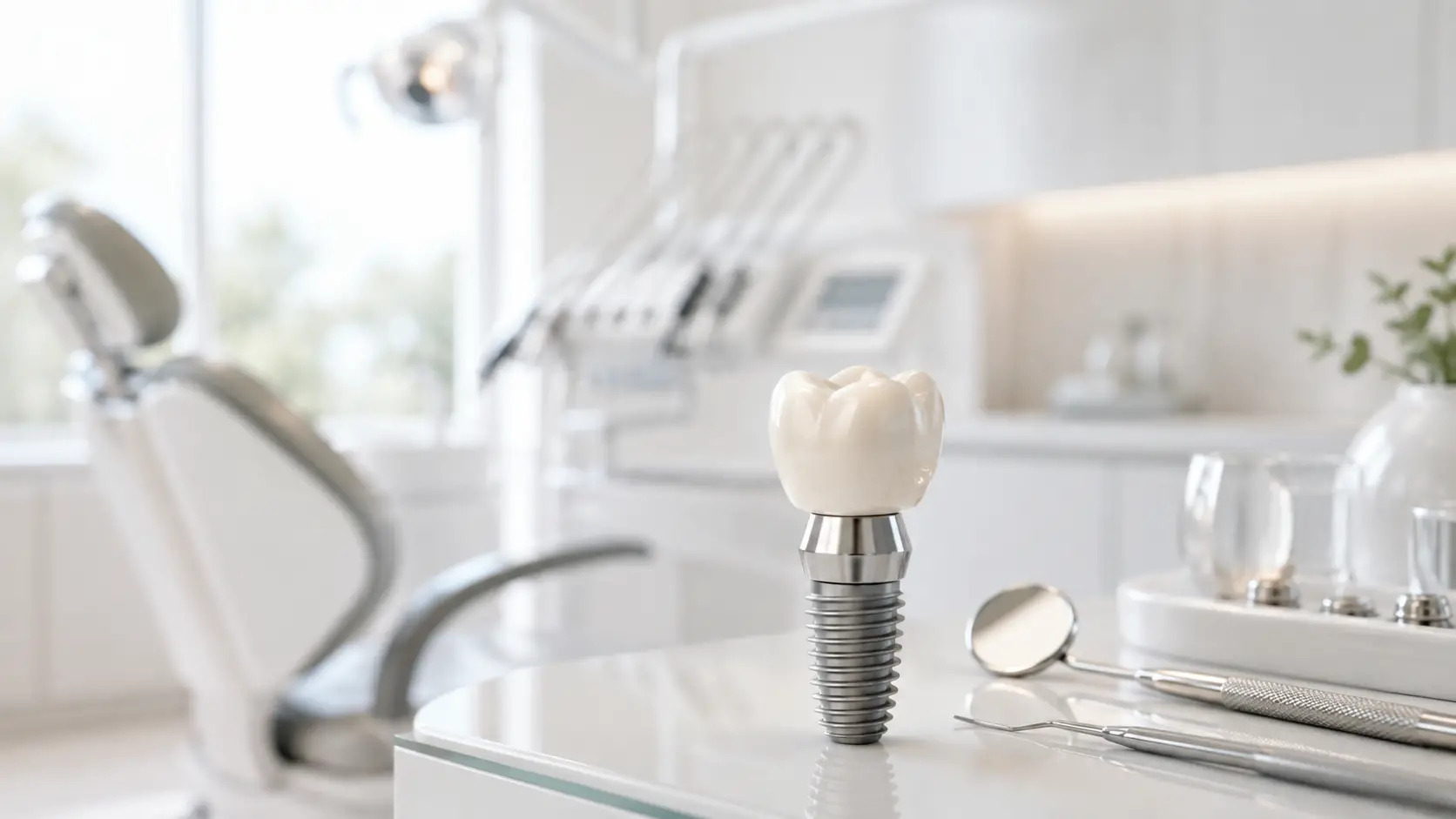
Once healing is complete, the crown is fitted based on digital measurement and customization.
Stages of Treatment
Diagnosis – Before anything else, your dentist needs to thoroughly assess your condition in order to tailor the most precise, professional treatment for you. A comprehensive diagnosis is carried out to map your situation ahead of treatment.
Treatment – Once diagnosis is complete and your treatment plan is set, it's time for the procedure itself.
Recovery – As with any medical procedure, a recovery process follows implant placement, allowing you to return to your normal daily routine. Once treatment is successfully completed, a gradual recovery process begins, and it deserves just as much attention as the procedure itself.
Crown placement – Once you've completed recovery, your treatment is officially finished. That said, this isn't quite the final step, you'll now need a crown fitted to protect your teeth.
Types of Crowns
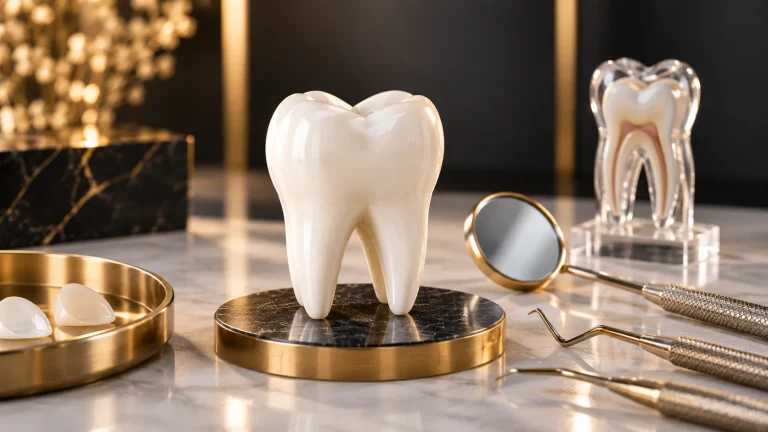
Zirconia Crown
Zirconia crowns are among the most popular types of crowns today, thanks to their significant aesthetic advantage (they're nearly invisible compared to other crown types) and their outstanding durability. That said, they are also considerably more expensive than most other crown types available today.
Cast Metal Crown
Made entirely of metal with no coating, hence the name. This is a strong, durable crown at a reasonable price, but it's worth noting it's less aesthetically pleasing compared to other options, and the presence of metal may cause gum wear over time.
Temporary Crown
A convenient crown whose main purpose is to serve as a temporary solution until the permanent crown is placed, used when there's an urgent need to protect the teeth following implant treatment.
How to Choose the Right Crown for You
As with most things in life, choosing a crown is a highly individual decision that varies from patient to patient, guided by your dentist's recommendation and shaped by your personal preferences.
Several factors can influence this choice, such as the location of the tooth. If you need a crown on one of your front teeth, the aesthetic aspect will naturally take priority, and in these cases, a zirconia crown is typically the best choice.
However, budget is also worth considering, zirconia crowns are more expensive than other options, so this is an important factor to keep in mind.
Laser vs. Traditional Implant Techniques, What's the Difference?
Dr. Mamraev explains: "Laser technology is increasingly being used in dental implants, and in many ways it represents the latest development. This method offers advantages for some implant procedures, but it isn't always the best option. It's important to understand the differences between the techniques and discuss them with your dentist."
Laser Implant Technique | Traditional Implant Technique |
Incision made using a precise laser beam | Surgical incision made with a scalpel |
Generally less swelling and pain during recovery | Generally more swelling during recovery |
Shorter recovery time | Longer recovery time |
The laser disinfects the treatment area | Higher infection risk if the area isn't separately disinfected |
Reduced bleeding due to the cauterizing effect | Bleeding may be more significant, depending on the dentist's skill and the patient's physiology |
Higher cost | Lower cost |
All-on-4 vs. All-on-6: What's the Difference, and Which Is Better?
All-on-4 and All-on-6 are two treatment approaches for full mouth restoration, both based on dental implants. So what's the difference between the methods, and which one is right for you? The table below offers a full comparison of the two approaches:
All-on-4 | All-on-6 |
Just 4 dental implants, strategically placed by the dentist along the jaw | 6 dental implants, placed evenly across the entire jaw |
Suited mainly to patients who have experienced significant bone loss, since this method requires fewer implants | Since more implants are typically placed evenly, this approach tends to suit patients who already have healthier bone compared to those better suited to All-on-4 |
Minimal long-term stability | For patients with relatively healthy bone, this method is likely to provide excellent long-term stability |
Choosing the Right Method for You
Here are a few factors that help determine which treatment method is right for you:
Jawbone condition – The quality and condition of the jawbone, along with the number of teeth affected, directly influence which method is best suited to you, since the number of implants needed depends on this.
Personal preference – As with any decision, some patients prefer one method over another. We always recommend following your dentist's guidance, but they will do their best to match the treatment method to your personal preferences.
Budget – Budget also plays a role here. While the All-on-6 method may produce higher-quality, longer-lasting results, especially if your initial bone condition is relatively good, it's considerably more expensive than All-on-4.

Implant-Supported Restoration, How Does It Work?
Implant-supported restoration is an advanced, innovative solution for patients dealing with tooth loss, or significant damage to one or more teeth.
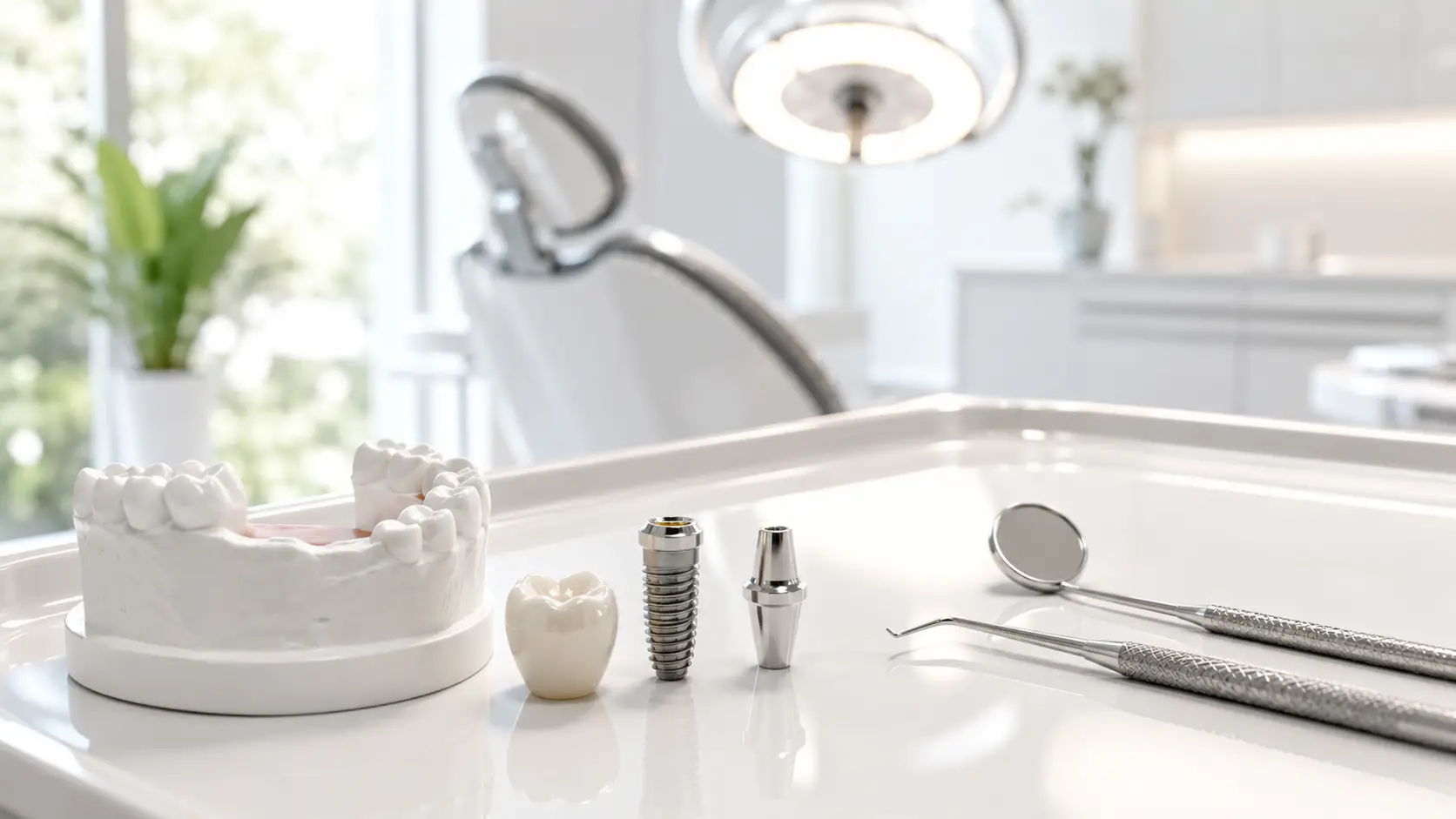
Restoration is achieved using a titanium structure on which a crown, a metal cap coated in porcelain, is mounted. In cases involving multiple missing teeth, implants can be placed at intervals near each other, followed by a restoration process involving a series of connected crowns, commonly known as a "bridge."
Same-Day Implants: Is It Really Possible?
Dr. Meir Mamraev addresses the myth surrounding same-day implants, explaining what's actually true about this option, and where the line falls between marketing claims and genuine suitability based on the condition of the mouth and bone.
Short Implants vs. Long Implants
Short Implants | Long Implants |
Typically between 6–8 mm in length | Typically between 10–16 mm in length |
Best suited for patients with significant bone loss, as they require much less available bone | Suited to a wide range of patients in various conditions |
Suited to specific cases, and may be less stable and durable in the long run | Very high long-term stability; much stronger and more durable than short implants |
Require relatively less available bone | Require significantly more available bone |
Relatively simple, convenient implant process | A more complex implant process, typically at a higher cost |
What Technologies Are Used in These Treatments?
Medical technology has advanced tremendously in recent years, and dentistry is no exception. It's no surprise, then, that a range of advanced technologies is used to streamline and improve various stages of dental implant treatment.
For example, 3D printing is now commonly used to create precise models of the patient's jaw, allowing the dentist to fit implants with perfect accuracy.
Computer-guided surgical navigation is also widely used, a technology that incorporates CT scans to create a virtual image illustrating the structure of the patient's jaw. These technologies help improve precision and make fitting implants to the patient's jaw much easier for the dentist to treat.
Successful Recovery, Post-Surgery Guidelines for Patients
Rest – As with any medical procedure, rest is essential for a proper recovery.
Cold compresses – Apply cold compresses to the treated area daily. It's recommended to do this for 20 minutes at a time.
Diet – We recommend prioritizing soft, easy-to-chew foods throughout your recovery, to minimize strain on the treated area. It's also best to avoid chewing on the treated side.
Smoking – Smoking is, to put it mildly, not the friendliest habit for oral health, but if you do smoke, it's essential to avoid it entirely during recovery, as smoking can compromise the quality of your healing and even damage the implant.
Dental Implant Treatment at Dr. Mamraev's Center for Aesthetic and Restorative Dentistry
Now that we've covered everything you need to know about dental implants, it's time to find a dentist who can guide you through the treatment smoothly and deliver the best possible outcome.
There's no shortage of recommended dentists today, but there's no question that the best choice for you is Dr. Mamraev, a dentist with deep experience in the field and an impressive track record of hundreds of satisfied patients.
Dr. Mamraev is committed to providing every patient with the most personal, honest care possible, without compromising on the highest standard of professional treatment available today. So if you're ready for dental implants done right, contact Dr. Mamraev's clinic today.
Frequently Asked Questions About Dental Implants
Are there possible complications or side effects?
As with any medical procedure, there are certain risks involved. That said, it's important to emphasize that the main risk here relates to cases where the implant bridges weren't designed correctly, since the bridges rest on the implants and bear the load of the bite.
If the bridges aren't optimally fitted, this can lead to excess pressure on the bite. That said, most implant procedures don't involve complications at all, the failure rate is relatively low, at up to 10% for upper jaw implants and 5% for lower jaw implants.
Other possible side effects and complications, such as inflammation around the implant site or bone loss, also occur very rarely, and it's worth noting these are not considered serious risks to begin with.
Is the treatment painful?
The procedure itself isn't painful, though some discomfort in the mouth afterward is fairly normal and common. The level of discomfort can vary from patient to patient, and it can be managed with pain relievers as needed.
Maintaining good oral hygiene after treatment is also important, and prioritizing soft foods that are easy to chew during recovery can help ease any discomfort.
How long does a dental implant last?
A quality dental implant typically lasts at least 15 years, though this can vary depending on the quality of the implant and the specific technique used.
Maintenance also plays a role. good oral hygiene is essential to prevent inflammation around the implant, which can weaken it over time. Smoking, in particular, has an outsized negative effect in this context, as it can reduce blood flow, which impairs tissue healing quality.
Who is dental implant treatment suitable for?
Dental implant treatment can suit virtually anyone who needs it. Typically, this includes people who have had teeth extracted, or who suffer from damaged teeth due to various conditions.
It's most common among people with other underlying health conditions, particularly older adults, though damaged teeth can occur at any age, and dental implants are the recommended solution in any such case.
Can dental implants be performed under general anesthesia?
Yes, dental implants can absolutely be performed under general anesthesia. This is particularly common for patients who report significant dental anxiety, or for relatively long or complex procedures (such as the placement of multiple implants). The decision regarding the type of anesthesia is made after evaluating the patient, taking into account their medical condition, the type and scope of the implant procedure required, and their individual level of anxiety (if any). It's worth noting that general anesthesia is administered by a certified anesthesiologist or a dentist certified in anesthesia.
Dr. Meir Mamraev
Dr. Meir Mamraev holds a Doctor of Dental Medicine degree (DMD) and serves as the Medical Director of Cortex, a dental implant company.
Dr. Mamraev has over 25 years of experience and heads the Center for Aesthetic and Restorative Dentistry in Kiryat Ono.
For many years, Dr. Mamraev has specialized extensively in dental aesthetics, including full mouth restoration. He has extensive experience performing complex restorations and is certified to perform dental procedures under general anesthesia.