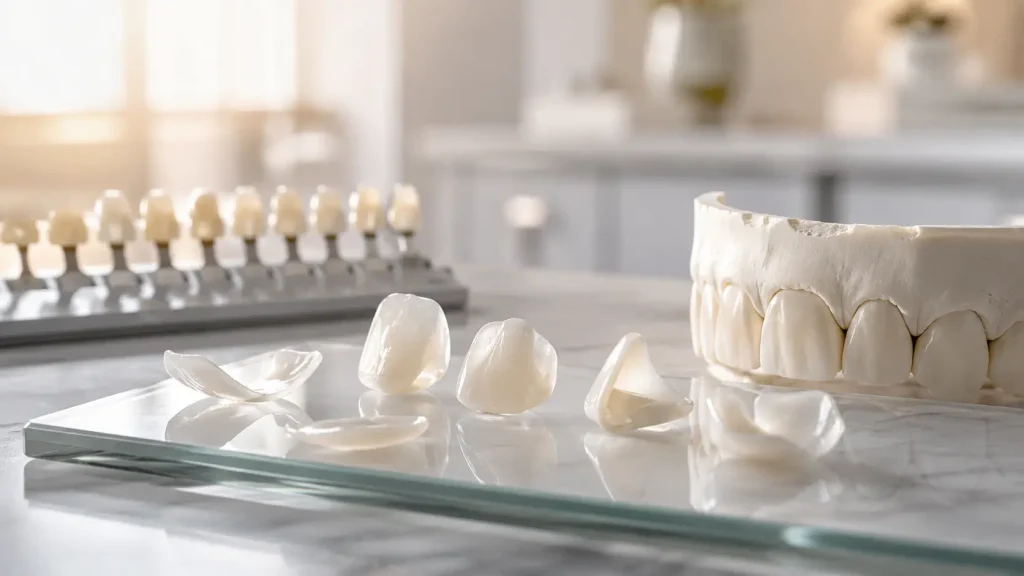
Porcelain Veneers – What’s Important to Know?
Porcelain veneers are designed to improve the appearance of teeth affected by discoloration, minor gaps, chips, cracks, wear or irregular shape. The right treatment plan depends on the condition and structure of the teeth, the specific aesthetic concern and the result the patient hopes to achieve. Veneers are individually designed to match the desired shape, size and shade while maintaining a natural appearance that fits the overall smile. Because treatment may involve removing a small amount of enamel, proper assessment and careful planning are important before deciding whether porcelain veneers are the most suitable option.
What Is Porcelain Veneer Treatment, and Who Is It For?
Porcelain veneers are one of the most advanced and valuable tools in modern cosmetic dentistry. They offer an excellent solution for a wide range of concerns: lengthening worn-down teeth, creating a uniform look across the smile, masking flaws such as cracks, chips, or stains, closing gaps or dark triangles between teeth, and elevating the overall smile.
Dentists work with two main materials for veneers: dental porcelain and composite resin.
- Over 25 years of experience.
- Emphasis on personalized, professional care tailored to each patient’s needs.
- Use of the most advanced technologies in modern dentistry.
- Commitment to excellence and maintaining the highest standards of service.
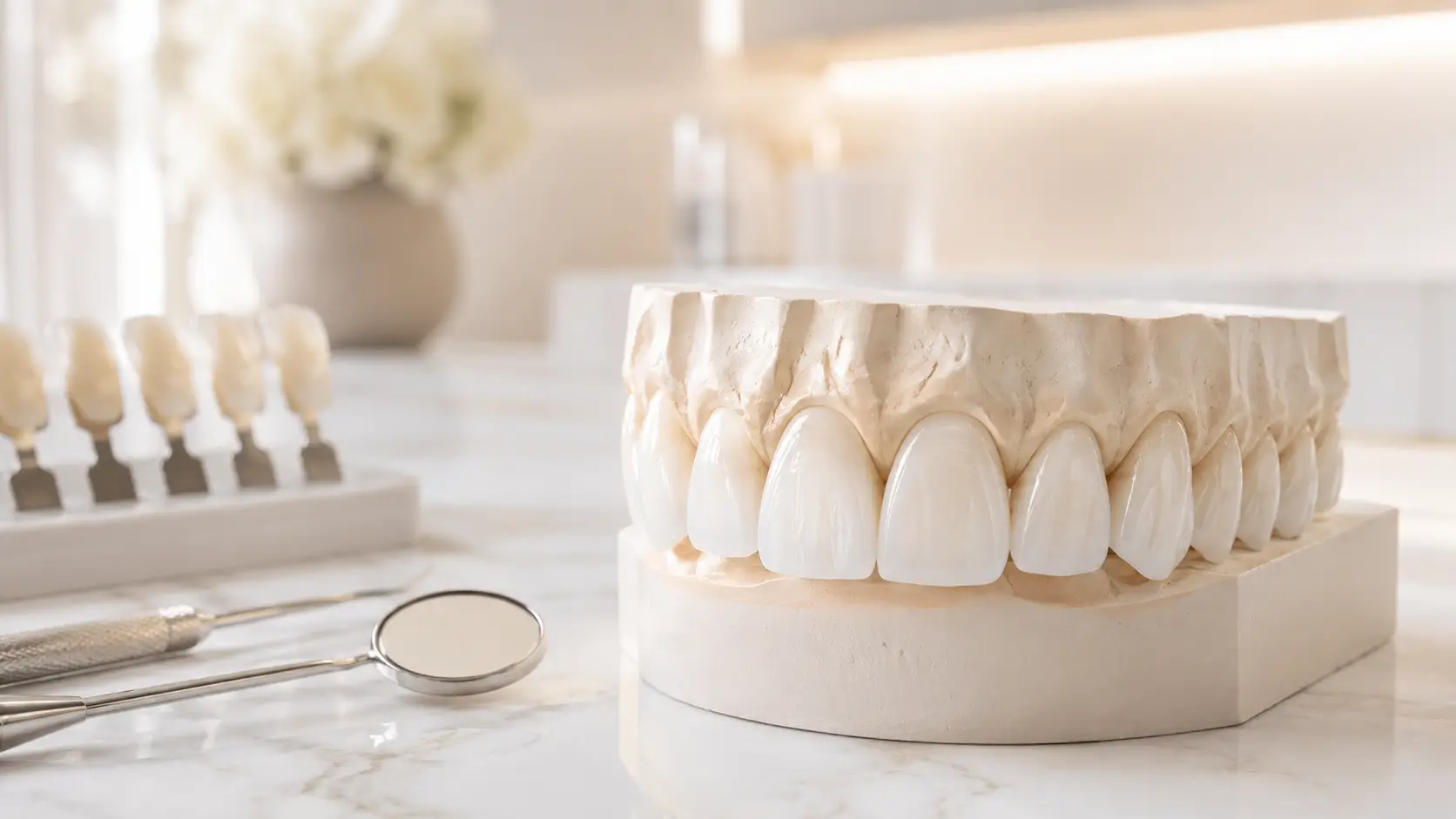
Porcelain Veneers
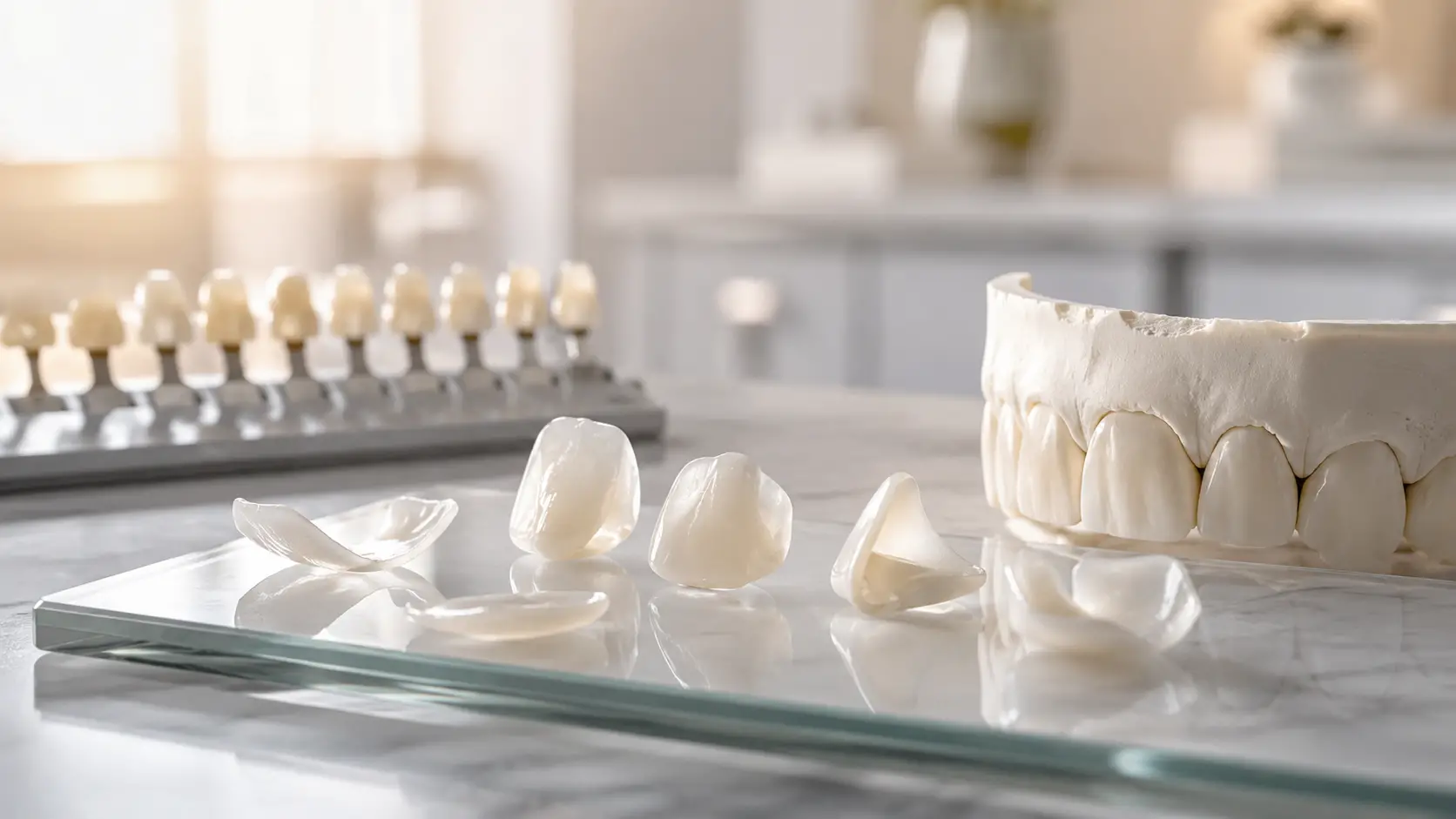
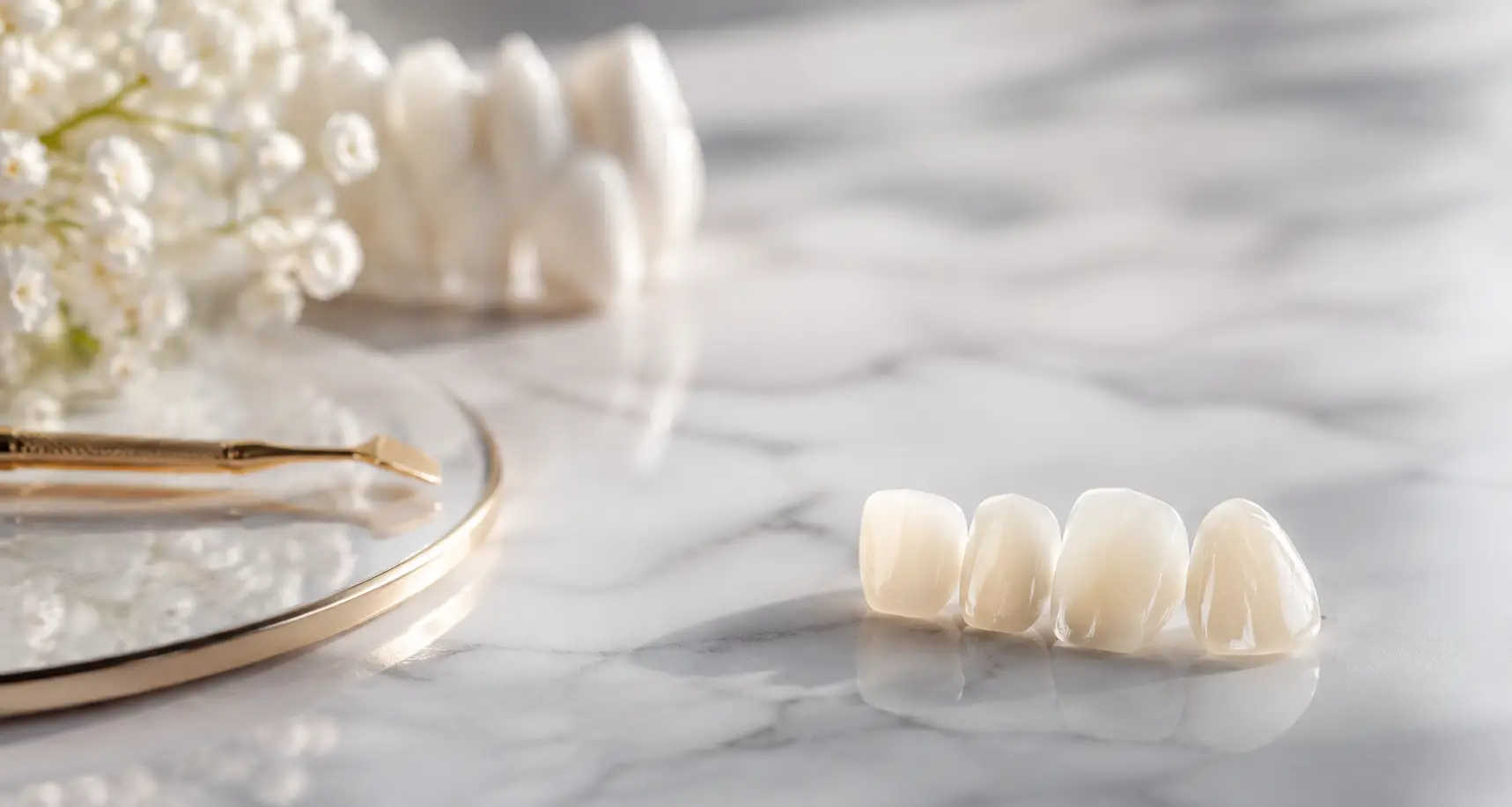
Porcelain veneers are the more expensive option and require a longer treatment, typically two to three clinic visits. They are custom-made in a dental lab and arrive as thin porcelain shells, called laminates, which are then bonded to the front surface of the teeth.
Porcelain costs more than composite, but it delivers superior, long-lasting results. It doesn't absorb color, resists staining, looks natural and attractive, and can last for decades, often a lifetime.
Composite Veneers
Composite is a material commonly used for white fillings and, at times, for repairing damaged teeth. Composite veneers offer several advantages: they're relatively affordable, don't require a dental lab technician, and can be completed in a single clinic visit.
That said, composite has its downsides too. While results are generally decent, they can deteriorate over time. The material is more prone to staining, and its lifespan is considerably shorter than other options.
How Porcelain Laminate Veneers Are Applied: The Three-Step Process
Step One The dentist lightly reduces the surface of the teeth that will receive the veneers, typically shaving down about half a millimeters on average. This creates room for the porcelain shells and ensures the finished veneers sit flush with the natural tooth line.
Step Two This stage takes place in the dental lab. A technician crafts ultra-thin porcelain shells, custom-made according to measurements and specifications provided by the dentist.
Step Three The dentist bonds the porcelain shells to the outer surface of the patient's teeth using a specialized bonding technique.
Thanks to advances in dental porcelain and bonding materials, dentists today can create high-quality veneers that give patients with dental flaws a beautiful, confident smile.
Common Cases Where Porcelain Veneers Are Worth Considering
Here are some of the most common situations where veneers are recommended:
A Fix for Cracked or Chipped Teeth
For anyone dealing with cracked or chipped teeth, porcelain veneers can be a real lifesaver. They restore the appearance of a complete, intact tooth while also protecting the damaged area from further injury. Porcelain is a durable, long-lasting solution, and many patients report a significant boost in self-confidence, largely because veneers blend seamlessly and naturally with the surrounding teeth, concealing unwanted imperfections.
A Fix for Tooth Discoloration
Changes in natural tooth color can be uncomfortable and sometimes undermine confidence. Porcelain veneers can deliver a dramatic transformation, producing a bright, white result that no whitening treatment can match. Because porcelain resists staining, that bright, flawless smile stays that way for years. It's a top-tier aesthetic solution that can enhance the entire look of the face.
A Fix for Gaps Between Teeth
Minor gaps or irregularities can be corrected beautifully with porcelain veneers. By shaping the veneers to match the tooth structure and the nature of the gaps, a dentist can create an even, straight, harmonious smile, without the lengthy process of orthodontic treatment. The advantage is twofold: a fast, attractive solution on one hand, and a convenient one that can be completed quickly on the other.
A Fix for Worn Teeth
For patients with worn-down teeth, porcelain veneers offer a solution that's both aesthetic and functional. The veneer covers the worn tooth, restoring a natural appearance similar to the original tooth, while also helping protect it from further wear. A younger, more polished, more attractive smile brings high satisfaction to patients seeking meaningful cosmetic improvement.
How Do I Know Which Veneer Is Right for Me?
Choosing the right type of porcelain veneer depends on several factors: the shape of your teeth, the specific issue you want to address, and, of course, your personal aesthetic preferences. The natural first step is a conversation with a dentist experienced in applying porcelain veneers.
Key considerations include tooth color, tooth shape, and overall dental structure. As a general rule, the goal is a smile that looks beautiful after treatment but still appears natural, not artificial, and one that fits harmoniously with the face.
It's worth noting that patients today have access to a range of veneer options, from the traditional, durable, natural-looking type to newer, minimalist, ultra-thin veneers that require less reduction of the natural teeth. Digital tools are also available today that let patients preview "before and after" images with different types of veneer, for a clearer sense of what to expect.
Consideration | Description | Application to Veneers |
Tooth shape | Depends on the patient's tooth shape | Veneer is custom-shaped to match |
Type of flaw | Depends on the specific issue to be corrected | Veneer addresses the specific flaw |
Aesthetic preferences | Depends on the patient's aesthetic preferences | Veneer is tailored to preference |
Tooth color | Natural tooth color should be considered | Veneer shade is chosen to match |
Dental structure | Patient's dental structure should be considered | Veneer is matched to structure |
How Can We Help
What bothers you most about your smile? (Select below for a personalized answer)
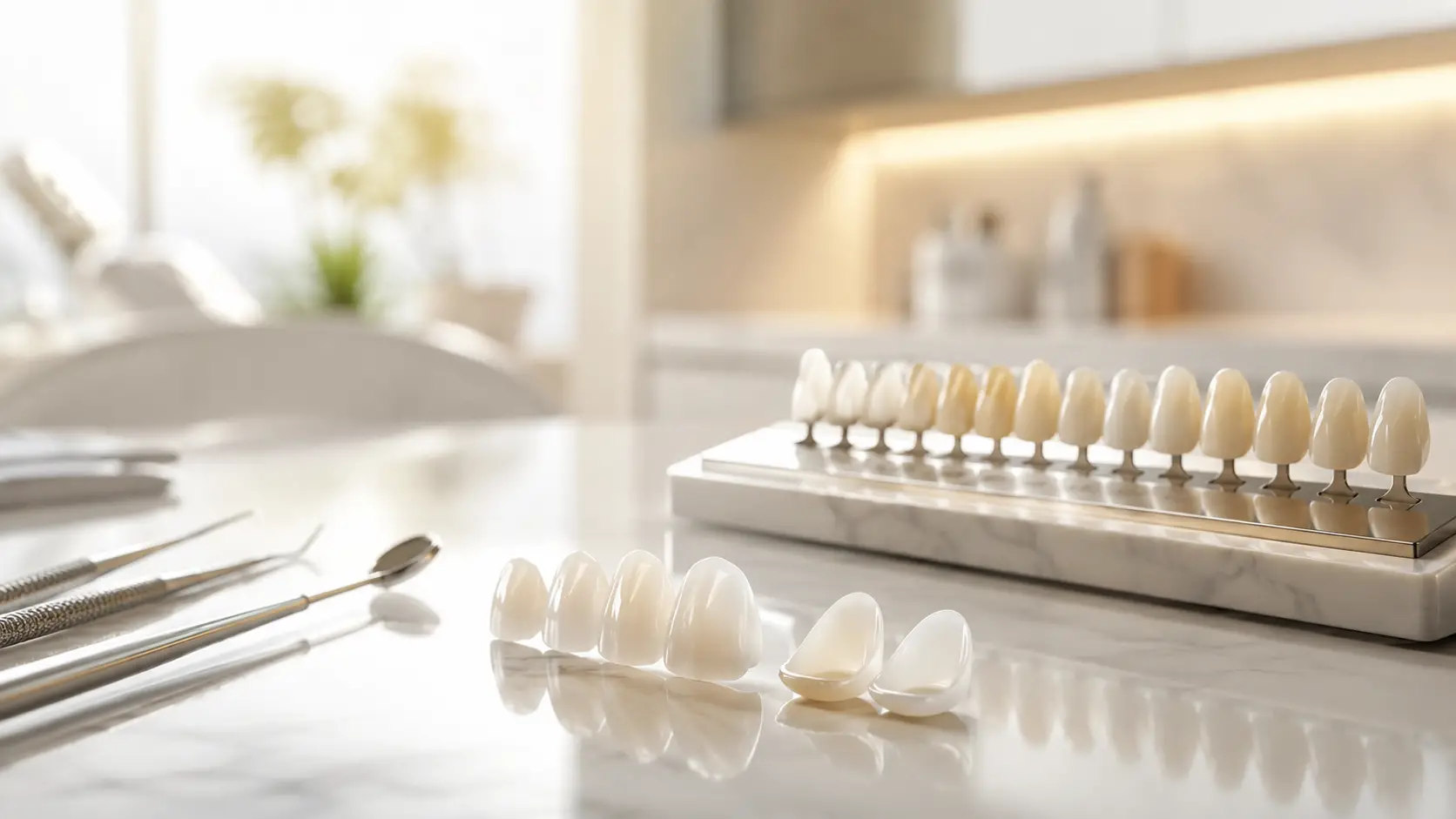
A Fix for Cracked or Chipped Teeth
Porcelain veneers can be a real lifesaver for cracked or chipped teeth, restoring the look of a complete tooth while protecting the damaged area from further harm.
Porcelain is a strong, long-lasting solution, and many patients describe a real boost in self-confidence, since veneers blend evenly and naturally with the surrounding teeth and hide unwanted flaws.
A Fix for Tooth Discoloration
Changes in natural tooth color can be uncomfortable and sometimes affect confidence. Porcelain veneers can create a genuine transformation, producing a white, bright result that no whitening method can rival.
Porcelain's stain resistance keeps that bright, flawless smile looking that way for years, a first-class aesthetic solution that can enhance the whole facial appearance.
A Fix for Gaps Between Teeth
Minor gaps or other irregularities can be corrected effectively with porcelain veneers. By shaping the veneers to the tooth structure and gap pattern, a dentist can achieve an even, straight, harmonious smile without lengthy orthodontic treatment.
The benefit is twofold, a quick, attractive result, and a convenient process that can be completed in a short time.
A Fix for Worn Teeth
For patients with worn teeth, porcelain veneers offer a successful solution, both cosmetically and functionally. The veneer covers the worn tooth, giving it a natural look similar to the original, while helping protect it from further wear.
A youthful, flawless, attractive smile brings high satisfaction to patients seeking meaningful aesthetic improvement.
Call for a consultation: 077-2313699
Health and Aesthetic Benefits of Porcelain Veneers
Here are three key aesthetic advantages of porcelain veneers, along with a health benefit that comes alongside the cosmetic one:
One of the best-known aesthetic advantages of porcelain veneers is their ability to beautifully mimic the look of a natural tooth. Veneers today can be designed to match the color, shape, and size of natural teeth, resulting in a smile that looks flawless and natural, which matters to patients who care about their appearance and value a polished look.
Porcelain veneers are known for excellent stain resistance, so patients enjoy a bright, white smile without the need for frequent whitening treatments (which are typically required for patients with tooth staining). For image-conscious patients, a bright white smile goes hand in hand with strong self-image.
The ability to precisely customize veneers, in shape, size, and color, delivers outstanding results, meaning every patient enjoys veneers uniquely tailored to fit like a glove.
From a health standpoint, porcelain veneers do more than just enhance the smile. They protect the surface of damaged teeth, acting as a kind of protective shield, and may help preserve tooth integrity and reduce sensitivity. That said, veneers cannot prevent dental disease, regular brushing and prompt treatment of any issues (like cavities) remain essential.
Straightening Teeth with Porcelain Veneers
Porcelain veneers can help with minor cosmetic corrections that create the appearance of straighter teeth. As noted, veneers are well-suited to closing small gaps and achieving a straighter-looking smile without needing braces or a dental bridge. However, veneers are not a substitute for orthodontic treatment in cases involving bite problems.
Veneers are also not always suitable for correcting significant crowding or noticeably crooked teeth, in these cases, braces and structured orthodontic treatment are required.
Complications and Side Effects
Porcelain veneers are considered safe and effective, but it's worth being aware of possible complications or side effects (though these are fairly rare, especially when treatment is performed at a reputable dental clinic). One of the main complications is sensitivity to heat or cold, resulting from the removal of a thin layer of enamel needed to bond the veneers. This sensitivity typically fades over time.
If it persists, it's worth consulting your dentist. Another possible complication is imprecise color matching, which can be resolved by replacing the veneer with one in a more accurate shade.
It's also worth noting that while porcelain is very durable, biting hard materials or chronic teeth grinding can eventually cause it to crack. Solutions exist for this too, but it's best to avoid habits like chewing hard candy or biting your nails.
Sensitivity to heat and cold – can occur due to enamel removal during the fitting process.
Imprecise color match – the veneer's shade may not perfectly match the surrounding teeth.
Cracks in the porcelain – can form under pressure, such as biting hard materials or grinding.
Need for replacement or repair – in cases of complications like cracks or color mismatch.
Can Porcelain Veneers Be Whitened?
Unlike natural teeth, porcelain veneers cannot be whitened. Porcelain is non-porous and far more resistant to staining than natural teeth.
If staining does occur, or if a patient feels their veneers aren't as white as they'd like, whitening usually isn't a practical fix. In most cases, the better approach is choosing the desired shade upfront, before the veneers are made.
Teeth whitening remains an option for patients who want whiter teeth but aren't yet ready for veneers. When existing veneers become stained or fade over time, the typical solution is to replace the old veneers with new ones.
How Long Does Porcelain Veneer Treatment Take?
Treatment is generally quite quick, typically no more than two to three clinic visits over a period of about one to two months. This includes a consultation, followed by tooth preparation (removing a small amount of enamel to make room for the veneers). At the next visit, patients receive their custom-made veneers, and once bonded, they can enjoy their new smile.
For comparison, whitening treatments are shorter and faster, with immediate results, though the number of sessions needed varies depending on the desired shade. Whitening typically needs to be repeated every six months to a year, whereas porcelain veneers are far more durable and don't require such frequent maintenance.
Aftercare: Caring for Your Porcelain Veneers
Once your veneer treatment is complete, a few care habits will help protect both your teeth and your veneers:
Just as good brushing habits matter before getting veneers, it's equally important to maintain them afterward. Keep brushing daily, ideally with a fairly soft brush to avoid wearing down the veneers.
Although porcelain veneers resist bacteria and decay, your natural teeth do not. Maintaining good oral hygiene helps prevent cavities and protects both teeth and gums. Regular dental checkups and cleanings, as needed, are recommended.
While veneers are highly durable, they aren't indestructible. Avoid habits like chewing ice, biting your nails, or other damaging behaviors, over time, these can crack or damage the porcelain. If you grind your teeth, talk to your dentist about solutions such as a custom nightguard.
Although porcelain veneers resist staining very well, color can still fade over time. Try not to overindulge in foods or drinks known to cause staining, this will help preserve the veneers' bright, flawless appearance.
Porcelain Veneers In Summary
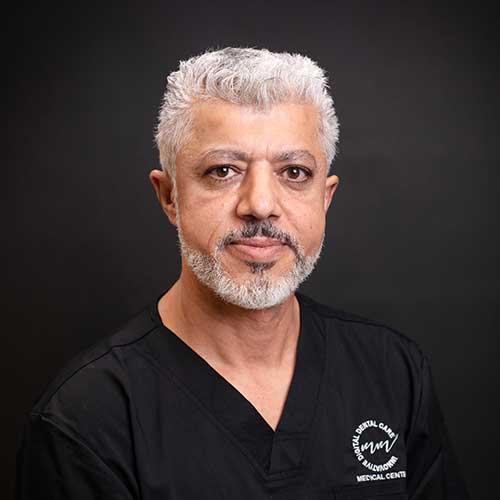
If you dream of a bright, beautiful smile like those of movie stars and other celebrities, Dr. Meir Mamraev would be happy to help make that dream a reality. Join the many patients who have already enjoyed years of durable, beautiful veneers.
Your Questions, Answered by Dr. Meir Mamraev
Does tooth reduction for veneers really damage the teeth?
Before getting veneers, many patients ask: can the reduction process harm the tooth or damage the enamel? In this video, Dr. Meir Mamraev clears things up and explains what actually happens during the preparation stage.
When are porcelain veneers used?
Veneers are used for uneven tooth surfaces, teeth that whitening hasn't been able to brighten, unusually shaped teeth, closing gaps between teeth, repairing chipped teeth, or correcting mildly crooked teeth.
How do you make porcelain veneers last as long as possible?
To enjoy your veneers long-term, it's important to maintain proper brushing habits, and if you grind your teeth, to use a custom nightguard to protect them. Good hygiene and regular dental visits will help you enjoy your veneers for years to come.
On average, how long do veneers last?
Thanks to advances in bonding materials and the strength of the bond between the porcelain shell and the tooth, veneers can now last many years, though replacement may eventually be needed due to wear, cracking, color changes, gum recession, or damage from teeth grinding.
Who is a good candidate for porcelain veneers?
Veneers are suitable for anyone with healthy teeth who wants to improve and enhance their appearance. They're also a good option for anyone looking to cover exposed tooth roots, which commonly result from gum recession.
Who should avoid porcelain veneers?
Veneers aren't recommended for patients who've had root canal treatment that caused the tooth to darken or turn gray, in these cases, a porcelain crown is usually preferred. Veneers also aren't ideal for patients who grind their teeth during sleep, since grinding increases the risk of tooth fracture. In these cases, it's best to consult your dentist, often, wearing a special nightguard can help protect the veneer.
Which is better, orthodontic treatment or porcelain laminate veneers?
For teenage patients, orthodontic treatment is generally preferable to veneers. But for older patients who'd rather avoid wearing braces for an extended treatment period, veneers can be a good alternative.
Dr. Meir Mamraev
Dr. Meir Mamraev holds a Doctor of Dental Medicine degree (DMD) and serves as Medical Director of Cortex, a dental implant company.
Dr. Mamraev has more than 25 years of experience and heads the Center for Aesthetic and Restorative Dentistry in Kiryat Ono.
For many years, Dr. Mamraev has specialized in dental aesthetics, including full-mouth rehabilitation. He has extensive experience with complex restorative cases and is certified to perform dental treatments under general anesthesia.
To stay current with the latest developments in dentistry, and dental implants in particular, Dr. Mamraev regularly attends professional training programs abroad.